
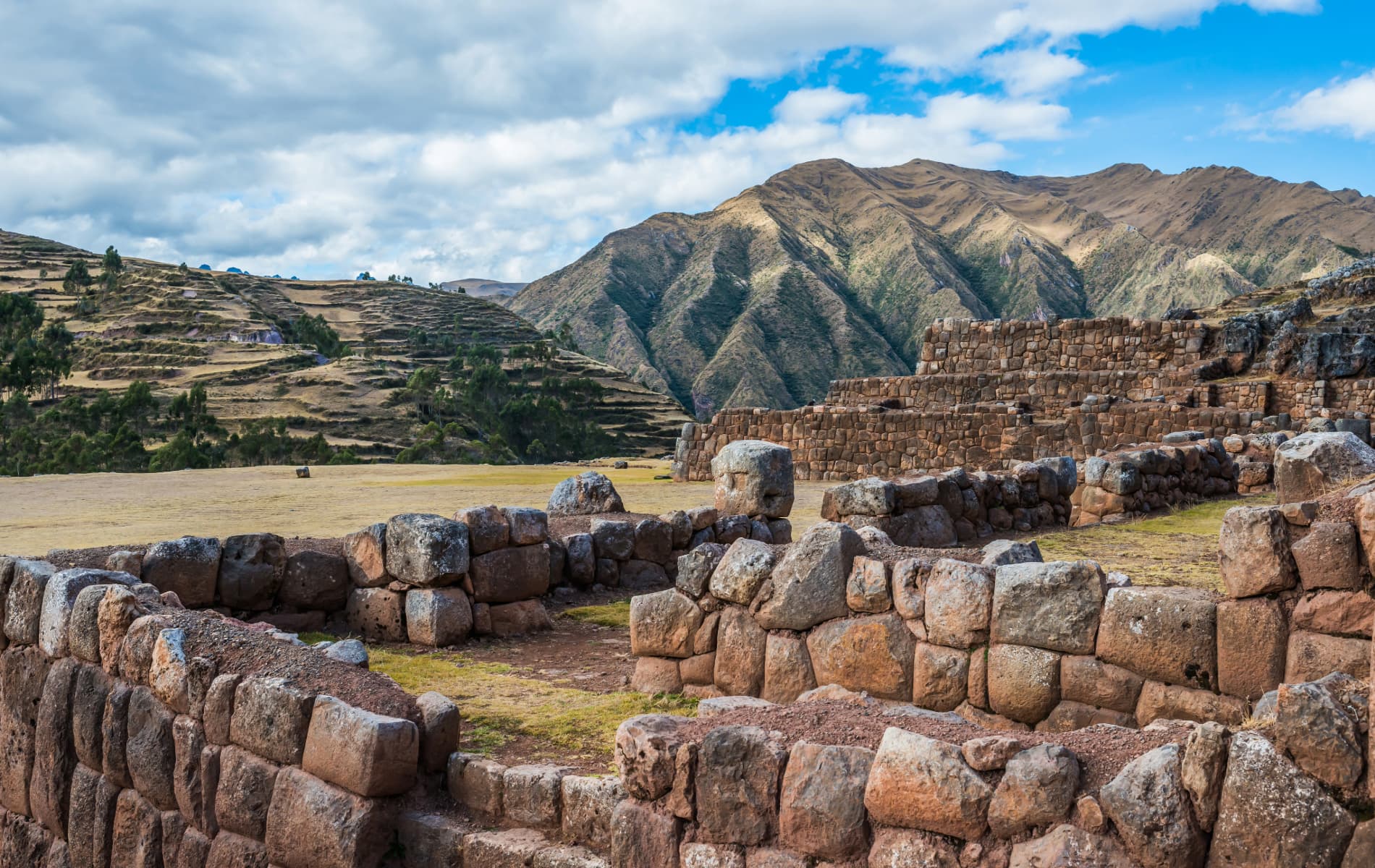

Located in the Sacred Valley of the Incas, the archaeological site of Chinchero is a must-visit destination for those looking to connect with the rich Inca and colonial history. In this article, we’ll take you on a fascinating tour through its ruins, exploring its impressive terraces, ancient rituals, and the fusion of cultures that defines this place.
Chinchero, A Bridge Between the Past and the Present
Chinchero is a place where the past comes to life. Sitting at over 3,750 meters above sea level, this archaeological site features Inca ruins intertwined with colonial structures, such as the Church of Our Lady of Monserrat. Here, you can walk through ancient agricultural terraces and Inca irrigation systems while learning about the malquis, the ancestor-worship rituals, and how Spanish conquerors repurposed these sacred spaces.
The History of the Chinchero Archaeological Site
During the Inca era, Chinchero was a sacred and strategic site. It served as an important royal residence for Inca Túpac Yupanqui, who chose this location for its tranquility and agricultural richness. The site also witnessed religious ceremonies related to the veneration of the ancestors, known as malquis.
The Malquis: Inca Rituals to Honor the Ancestors
One of the most remarkable practices of the Incas in Chinchero was the veneration of the malquis, the mummified bodies of their ancestors. These bodies were revered, dressed, and fed, as it was believed they still possessed life. During the Ayamarca ritual, celebrated in November, the mummified bodies were carried in processions to honor them. When the Spanish arrived, this ritual was adapted, replacing the mummies with images of Catholic saints, giving rise to the Andean Corpus Christi.
Exploring the Inca Structures of Chinchero
The Chinchero archaeological site impresses visitors with its grand structures, where the Incas demonstrated their mastery in agricultural engineering and resource management. The terraces and colcas (granaries) that remain standing are a testament to Inca ingenuity.
The Agricultural Terraces and Inca Irrigation System
One of the most impressive features of Chinchero is its agricultural terraces, designed to maximize mountainous terrain and facilitate food cultivation. Here, the Incas grew tubers, such as potatoes, using advanced irrigation techniques. Water was sourced from a nearby lagoon and efficiently distributed through a network of canals running along the terraces.
These terraces are a clear example of the deep agricultural knowledge the Incas had in the Andes. The terraces not only prevented erosion but also helped create a microclimate ideal for high-altitude farming.
The Colcas: The Inca’s Strategic Granaries
Another fascinating aspect of Chinchero is its colcas, the ancient Inca granaries. These storage units were used to keep food supplies like maize, potatoes, and other crops, ensuring sustenance during times of scarcity. During the Manco Inca Rebellion against the Spanish, these granaries were strategically burned to prevent the invaders from resupplying themselves. Decades later, in the 1970s, the granaries became a filming location for the Hollywood movie The Last Movie, showcasing their historical and visual significance.
The Inca and Colonial Fusion: The Church of Our Lady of Monserrat
One of the clearest symbols of cultural fusion in Chinchero is the Church of Our Lady of Monserrat, built by the Spanish in 1607 on the foundations of an Inca sacred site. This colonial church, dedicated to a Catalonian Virgin highly venerated in Barcelona, illustrates how the colonists used ancient religious sites to impose their faith.
When visiting the church, you’ll notice how the Inca stone foundations support the colonial construction, offering a visual example of how Inca and Spanish cultures overlapped in this space. The frescoes and carvings inside the church stand as witnesses to this complex history.
Conclusion: An Unforgettable Journey into the Inca Past
Exploring the ruins of Chinchero is more than just a tourist visit; it’s a profound journey into the Inca past, where history and culture merge in a stunning natural setting. Walking through the terraces, discovering the ancient Inca rituals, and seeing how colonial legacies intersect with Inca culture allows you to grasp the significance of this place.
Chinchero not only offers a rich archaeological heritage but also a living connection to the past, reminding us of the grandeur of the Incas and the enduring influence of Spanish colonization. If you’re visiting the Sacred Valley, you cannot miss the opportunity to explore this magical place and feel the weight of its history in every corner.
Frequently Asked Questions
What are the malquis?
The malquis were the mummified bodies of Inca ancestors, revered and used in rituals to honor the dead. It was believed these bodies still had life, so they were dressed and fed during ceremonies.
What crops were grown in the terraces of Chinchero?
The Incas primarily grew tubers, such as potatoes, using the ingenious system of agricultural terraces and irrigation developed by their engineers.
Why were the granaries of Chinchero burned?
During the Manco Inca Rebellion, the granaries (colcas) in Chinchero were burned to prevent the Spanish from resupplying themselves with food as they pursued the Inca rebels.
What is the significance of the colonial church in Chinchero?
The Church of Our Lady of Monserrat, built in 1607, symbolizes the fusion of Inca and colonial cultures, as it was erected on top of an Inca sacred site.
How can I get to the Chinchero archaeological site?
You can reach Chinchero from Cusco by bus or taxi, or as part of a tour through the Sacred Valley. The journey takes approximately 45 minutes.