

Tambomachay, known as the “Water Temple,” is an Incan archaeological site located 5 kilometers from Cusco, Peru. This site is famous for its sophisticated water system and impressive stonework. The name “Tambomachay” translates to “place of rest” in Quechua, reflecting its possible use as a site for nobility to rest and cleanse before entering Cusco.
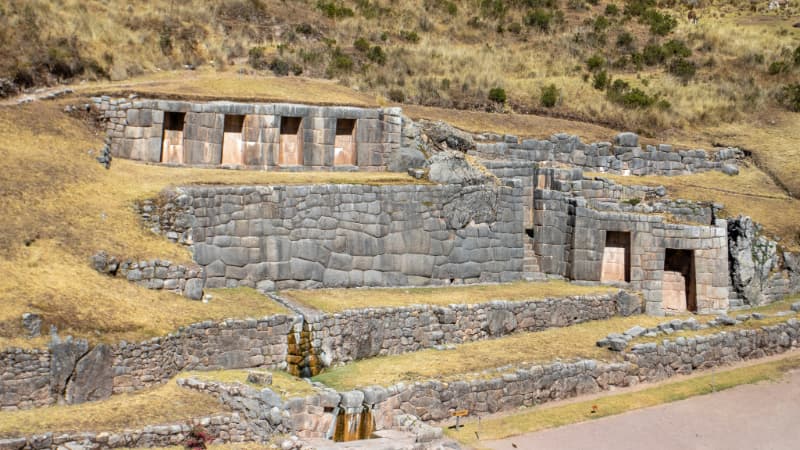
The site covers approximately half a hectare and consists of a series of aqueducts, canals, and waterfalls that run through terraces of finely cut stone. These features highlight the Incas’ advanced knowledge of hydraulic engineering.
History and Spiritual Significance of Tambomachay
Tambomachay is believed to have been constructed during the reign of the Inca Pachacuti (1438-1471 AD), a period when Cusco was transformed into the heart of the Incan Empire. The site’s constant flow of water—despite its location in the arid highlands—suggests its importance in Incan rituals and ceremonies related to water worship.
Historians suggest that Tambomachay may have served multiple purposes: a spiritual purification site, a military outpost, and a royal retreat. The trapezoidal niches found in the site are typical of Incan architecture and may have held idols or offerings related to water deities.

Architecture and Hydraulic Design: Advanced Incan Engineering
Tambomachay’s construction showcases the ashlar masonry technique—where stones are cut to fit together without mortar. This method not only provided durability but also demonstrated the Incas’ ability to work with irregularly shaped stones to create seismic-resistant structures.
The site’s water system is one of its most remarkable features. Water is channeled through stone aqueducts and flows into a series of small waterfalls. What’s astonishing is the precision of the water flow: the two main waterfalls deliver water with almost identical volume and speed, a feat of engineering that underscores the Incan mastery of hydraulics.
Tambomachay’s Role in Incan Culture and Defense
In addition to its religious significance, Tambomachay likely played a strategic role in the defense of Cusco. A nearby watchtower suggests that the site may have been used to monitor and control access to the valley of Cusco, providing security for the empire’s capital.
Tambomachay’s location, close to other important sites such as Puca Pucara (a military fortress), indicates that it was part of a network of fortifications and ceremonial sites that protected and sanctified the approaches to Cusco.
How to Visit Tambomachay Cusco Peru: A Practical Guide
Tambomachay is easily accessible from Cusco, making it a popular destination for tourists exploring the region. The site sits at an altitude of 3,700 meters (12,139 feet), so visitors should be prepared for high-altitude conditions.
The best time to visit is during the dry season (May to September) when the weather is clear, and the paths are easier to navigate. Many visitors include Tambomachay in a half-day tour along with other nearby sites like Sacsayhuamán and Qenqo.
Final Reflections: The Magic of Tambomachay Cusco Peru
Tambomachay remains a site of archaeological and historical importance. Its precise stonework, advanced water system, and strategic location offer a glimpse into the technological and cultural achievements of the Incan civilization.
As you explore the site, take note of the carefully carved stones, the harmonious blend of nature and architecture, and the intricate water channels. Each element of Tambomachay reflects the ingenuity and spirituality of the Incas, making it a must-visit destination for anyone interested in Peru’s rich history.
