
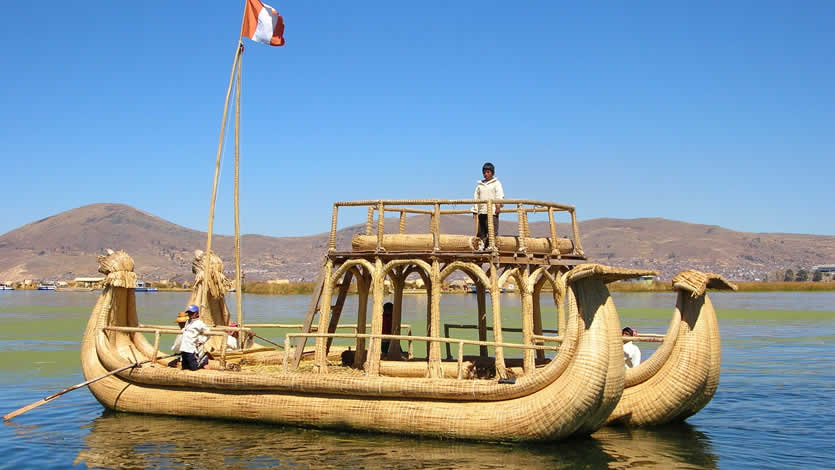
Lake Titicaca is the highest navigable lake in the world. It is located over 3,800 meters above sea level, between Peru and Bolivia. This lake is not just a body of water; it is a place full of important stories and legends for the people who live nearby. Its bright blue waters are surrounded by mountains and are home to many communities that have lived there for centuries.
History and Myths of Lake Titicaca
A long time ago, according to the ancient legends of the Incas, the first leaders, Manco Cápac and Mama Ocllo, emerged from Lake Titicaca. They were sent by the Sun God to start a great empire called Tahuantinsuyo. This story has been passed down through many generations and is an important part of the region’s culture.
Geography of Lake Titicaca: Size, Altitude, and Climate
Lake Titicaca is very large, covering an area of 8,562 square kilometers. It is located 3,812 meters above sea level, making it a very high and cold place. During the day, the weather can be pleasant, but at night, temperatures can drop significantly, making it very cold. The lake is also very deep, with some parts reaching depths of up to 281 meters.
The Islands of Lake Titicaca: A Journey Through Time
- Isla del Sol and Isla de la Luna: The Heart of the Inca Empire
Isla del Sol is the largest island in the lake and has great historical importance. It is said to be the place where the Inca civilization began. Near this island is Isla de la Luna, which also has ancient ruins and many stories to discover. - The Floating Islands of the Uros: A Living Culture
The floating islands are very special because they are made of a plant called totora. Here, the Uros people have lived for a long time. They build their homes, boats, and everything they need using this plant. - Isla Taquile and Amantaní: Gems of Experiential Tourism
Isla Taquile is famous for its weaving. The men on the island are experts at making clothes using techniques that have been passed down through generations. On Isla Amantaní, you can experience local life up close by participating in their daily activities.
Biodiversity in Lake Titicaca: A Natural Treasure
Lake Titicaca is home to many unique species, such as the giant Titicaca frog, which lives in the deep waters of the lake. There are also many birds and plants that can’t be found anywhere else in the world. However, due to climate change, some of these species are in danger, so it’s important to protect them.
Practical Tips for Visiting Lake Titicaca
- How to Get to Lake Titicaca
You can reach the lake from Peru or Bolivia. From Peru, the nearest city is Puno. From Bolivia, you can get there from La Paz. - What to Pack for Your Visit
It’s important to bring warm clothes because it gets cold, especially at night. It’s also useful to bring sunscreen because the sun is very strong at this altitude. - Best Time of Year to Visit
The best time to visit is during the dry season, which runs from May to October. During these months, there is less rain, and the weather is more pleasant for exploring the lake.
Must-Do Activities at Lake Titicaca
There are many fun activities to do at Lake Titicaca. You can sail on a boat, visit the islands, and learn about the customs of the people who live there. You can also participate in local festivals and enjoy their music and food.
Where to Stay: Accommodations at Lake Titicaca
There are many places to stay near the lake. You can stay in hotels in Puno, or on the islands, where local families will welcome you and make you feel at home. It’s a great way to learn more about their way of life.
Tourism Impact and Sustainability at Lake Titicaca
Tourism has brought many opportunities, but it’s also important to take care of the lake so it doesn’t suffer damage. Being a responsible tourist means not leaving trash and respecting the traditions and environment.
Conclusion: Why Lake Titicaca Should Be on Your Travel List
Lake Titicaca is a magical place full of history, culture, and natural beauty. If you like learning new things and enjoying nature, this lake is a destination you shouldn’t miss. Visit and discover all its secrets!
Questions?
What is the best time of year to visit Lake Titicaca?
- The best time to visit Lake Titicaca is during the dry season, which runs from May to October. During these months, there is less rain, making the weather more pleasant and ideal for exploring the lake.
How can I get to Lake Titicaca from Lima or Cusco?
- To reach Lake Titicaca from Lima, you can fly to Juliaca, which is about an hour away from Puno, the closest city to the lake. From Cusco, you can take a bus or a train to Puno, which takes between 6 to 10 hours.
Is it safe to visit the floating islands of the Uros?
- Yes, visiting the floating islands of the Uros is safe. The Uros people are used to welcoming tourists and are very hospitable. However, it’s important to respect their customs and follow the guidance of local guides.
Do I need any special preparation for the altitude at Lake Titicaca?
- Since Lake Titicaca is over 3,800 meters above sea level, you may experience altitude sickness. It’s recommended to acclimatize slowly, stay hydrated, and avoid strenuous physical activities during the first few days.
What kind of activities can I do at Lake Titicaca?
- At Lake Titicaca, you can enjoy a variety of activities such as boating, visiting the islands to learn about local culture, participating in traditional festivals, and exploring ancient ruins on Isla del Sol and Isla de la Luna.