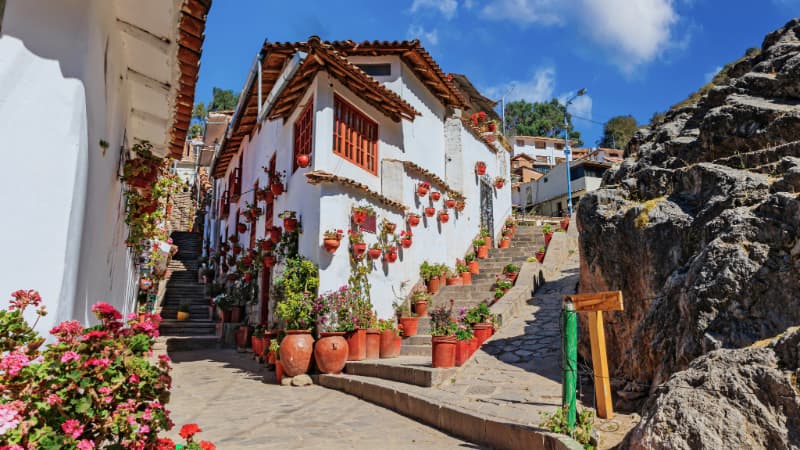
San Blas, a traditional and picturesque neighborhood in Cusco, is known as the “artist’s quarter”. Located in one of the city’s highest areas, it offers spectacular views and cobblestone streets that invite you to take a walk through history. This neighborhood has witnessed Cusco’s evolution from pre-Inca times to becoming a vibrant cultural hub.
The History of San Blas: From Toco Cachi to Colonial Cusco
The neighborhood of San Blas, originally known as Toco Cachi, which means “salt hole” in Quechua, was a sacred place during the Inca period. According to chronicles, a small saltwater spring once flowed here, giving the area its name. With the arrival of the Spanish, the neighborhood was transformed, and in 1562, the San Blas Temple was built on what is believed to have been an Inca shrine. Interesting fact: Archaeological excavations in the area have uncovered terraces and structures belonging to pre-Inca cultures.
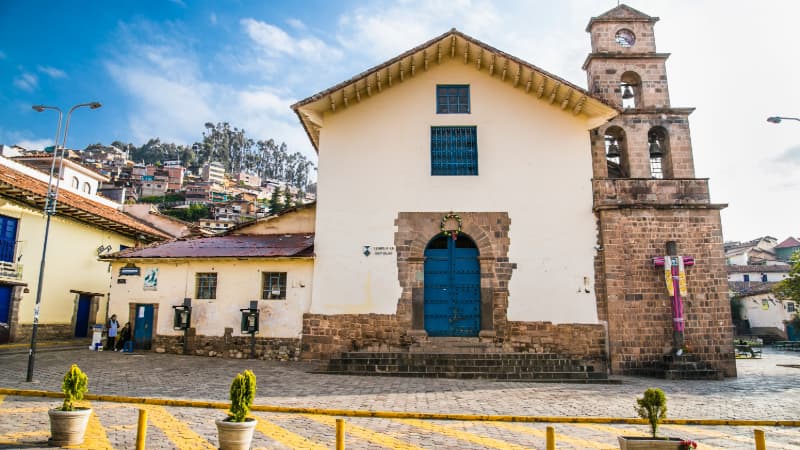
Architecture and Landscape: Cobblestone Streets and Panoramic Views
The streets of San Blas are famous for being narrow and cobblestone, reflecting their colonial origins. Many colonial houses, built atop Inca foundations, feature wooden balconies and red-tile roofs. The Cuesta de San Blas, one of the most emblematic streets, offers breathtaking views of the Cusco valley. Curious fact: San Blas is also known for its numerous springs, which emerge in various parts of the neighborhood, adding to its unique charm.
The San Blas Pulpit: A Colonial Art Treasure
Inside the San Blas Church lies one of the greatest treasures of colonial art in Cusco: the cedar pulpit. Carved with exceptional precision, this pulpit is considered a masterpiece of colonial sculpture. While the identity of the artist remains unknown, it is widely believed to be the work of a Quechua craftsman who combined European techniques with Andean iconography. Interesting fact: This pulpit is one of the few pieces on the continent carved from a single piece of wood.
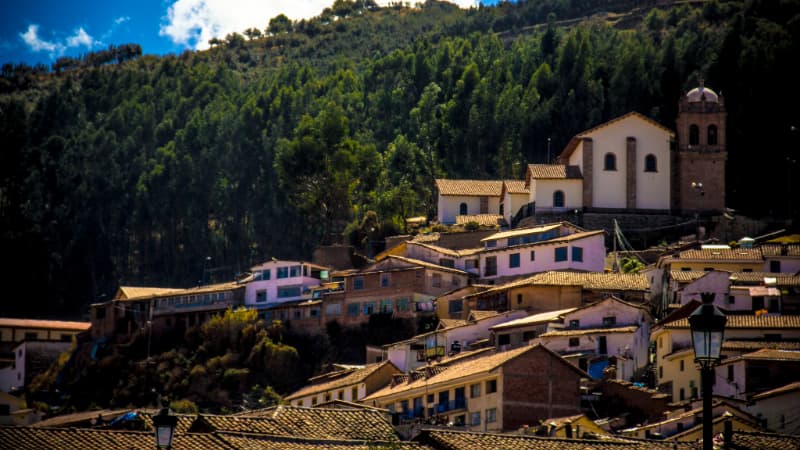
The Heart of Cusco’s Craftsmanship
San Blas is renowned as the artisans’ quarter, where generations of craftsmen families have honed their skills. The streets are lined with workshops and shops offering wood carvings, ceramics, and traditional textiles. Curious fact: San Blas is the birthplace of the famous Cusqueño sculptor Hilario Mendivil, known for his elongated figures of saints and virgins, a characteristic of Cusco’s religious art.
Exploring the Artists’ Neighborhood
Exploring San Blas is a unique experience. Start at the Plazoleta de San Blas, the heart of the neighborhood, where cultural fairs and events are often held. Then, climb the Cuesta de San Blas to discover artisan workshops and art galleries. Don’t forget to enjoy the local cuisine at one of the neighborhood’s cozy cafes and restaurants, offering everything from traditional dishes like ají de gallina to high-quality Peruvian coffee. Curious fact: The Cuesta de San Blas is also known as the “Road to Antisuyo,” one of the four main roads that led from Cusco during the Inca period.